Dancing, as an embodied art, leaves no immediate trace. There are no canvases to hang, no poems to print, no manuscripts to preserve. What remains is fleeting: a turn, a rhythm, a shared breath.
The aroma of jasmine lingers in the air as winter brushes lightly against silk. As guests enter the palazzo, the chandelier seems to welcome them, its light reflecting softly as carnet du bal are placed into waiting hands. You nod, smile, exchange a few words with familiar faces, then slow your steps as you approach new acquaintances. Gradually, almost imperceptibly, time begins to loosen its hold.
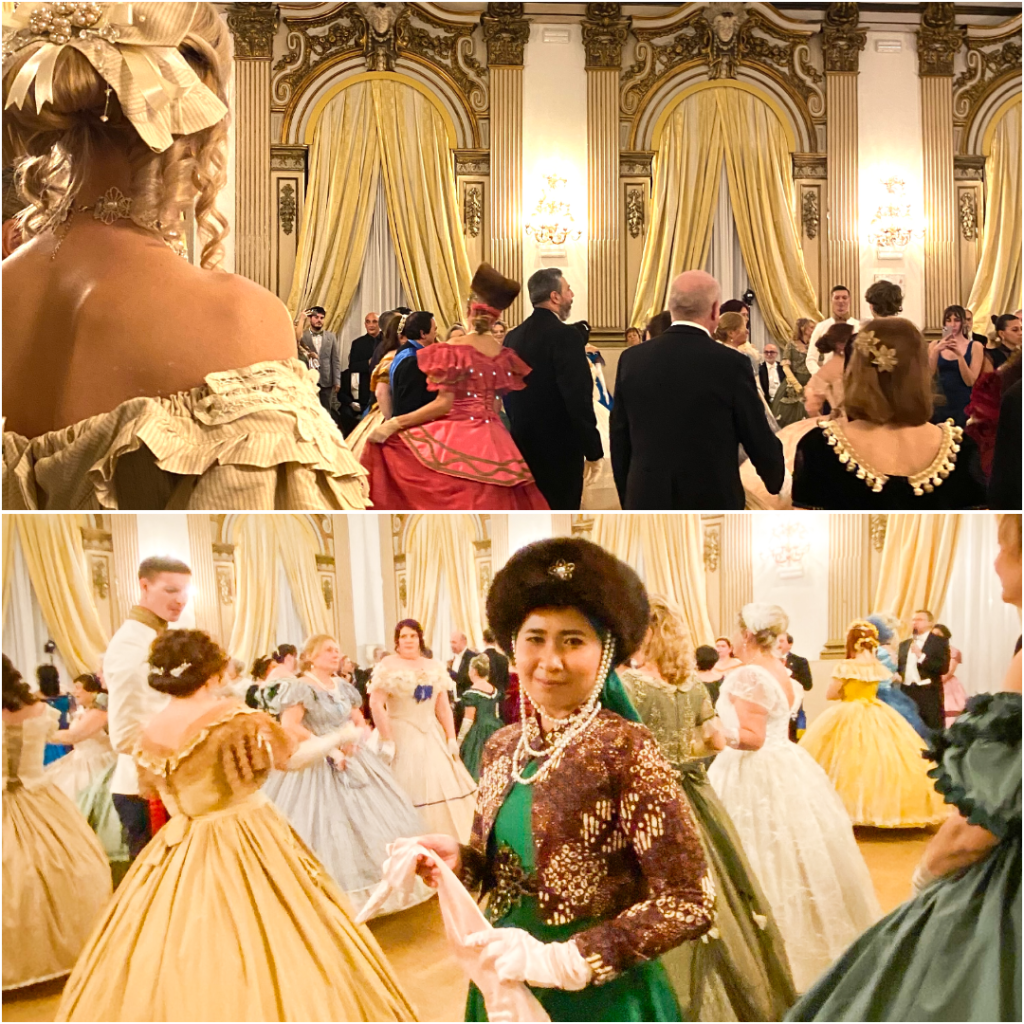
The evening reveals itself as more than a dialogue with the past; it becomes a quiet act of social bonding, a way of gathering a community forward. What unfolds is not merely entertainment, but a space in which elegance is practiced, relationships are understood, and mutual regard is gently reaffirmed.
When the host invites the maestro to begin, the room listens. Through the measured turning of the waltz, the restrained grace of a pas de grâce, and the lighthearted vitality of the quadrille, centuries of beauty and tradition reappear—carried not as weight, but as movement. The swish of dresses and the cadence of steps invite a slower tempo, reminding us that presence itself can be restorative. A ball reveals itself not simply as a series of dances or displays of fashion, but as a state of mind: a quiet commitment to tending beauty, tradition, and craftsmanship with care, so that they may continue beyond us.
During the winter months, when nights linger and daylight feels scarce, even art can seem insufficient. Yet as Šostakovič’s second waltz fills the ballroom, something shifts. A shared lightness emerges—measured, collective, warm. Gloves are drawn on. Cavalieri offer their hands, guiding their partners with ease and attentiveness onto the floor. Soon the space fills with color—soft pinks, deep blues, muted greens, flashes of red—tones that feel almost otherworldly beneath the lights. In moments like this, all the senses fall into alignment. Poetry, music, and theatrical gesture no longer compete, but listen to one another. Sound reaches inward first, stirring emotion; movement gives that emotion form. Dance becomes a bridge—between absence and presence, thought and feeling.
To build tradition is not to bypass difficulty. We return to these rituals not to preserve them untouched, but to inhabit them fully.
In such moments, you realise that you are not merely observing the art—you are within it. Dancing, as an embodied art, leaves no immediate trace. There are no canvases to hang, no poems to print, no manuscripts to preserve. What remains is fleeting: a turn, a rhythm, a shared breath. And yet, within that fleetingness lies its vitality. It is precisely because nothing is retained that the moment feels so alive.
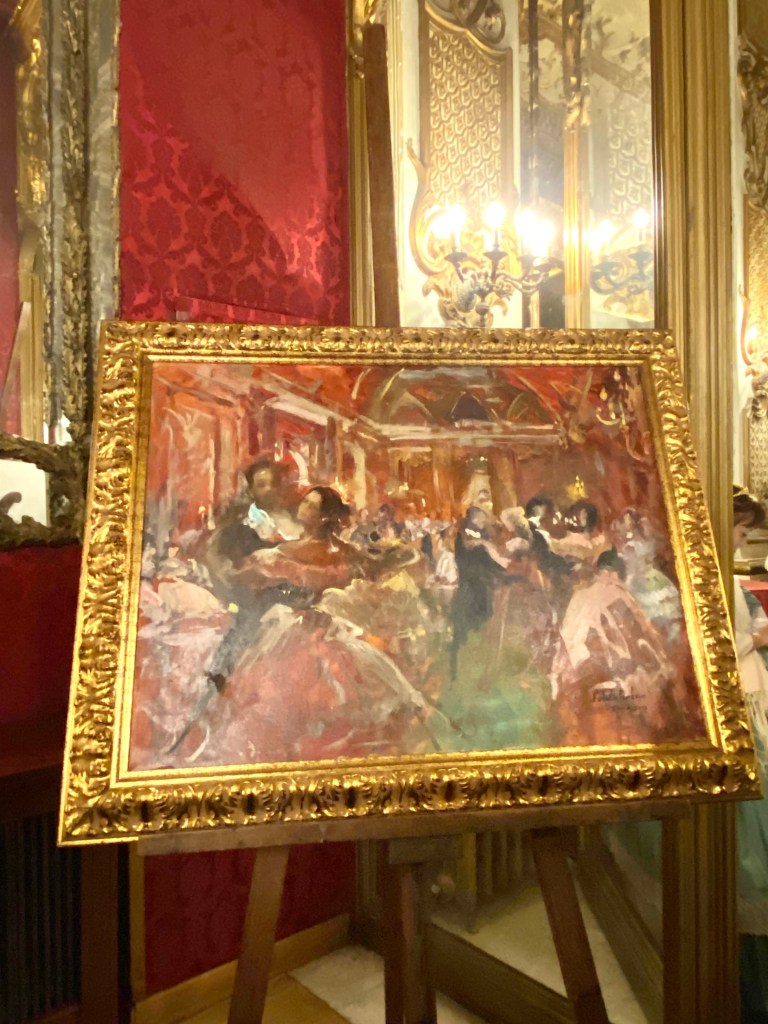
Beyond the ballroom, the world moves quickly. The opportunity to grow slowly—to linger as a beginner or remain an amateur—often feels diminished. We are encouraged to produce, to advance, to show results. In doing so, we sometimes forget that a painting, a poem, a book, even a dissertation, is only a trace of something lived. The transformation happens elsewhere: in the process itself. Quiet attention, and a long, patient regard for tradition and custom, shape us gradually.
As with dance, the result may not be immediate—if it exists at all—but when grounded in generational wisdom, the practice endures, carried forward, rehearsed, and performed again by those who follow.
To build tradition is not to bypass difficulty. We return to these rituals not to preserve them untouched, but to inhabit them fully. Even when the modern world demands speed, the care of tradition through creation, repetition, and performance remains meaningful. The process, more than the outcome, is what alters us. We are drawn to art and beauty because we recognise something familiar within them. They remind us that we are not separate from what we cultivate—we are shaped by it, and, in quiet ways, carried along by its continuity.


 Shima Trisna
Leave a comment