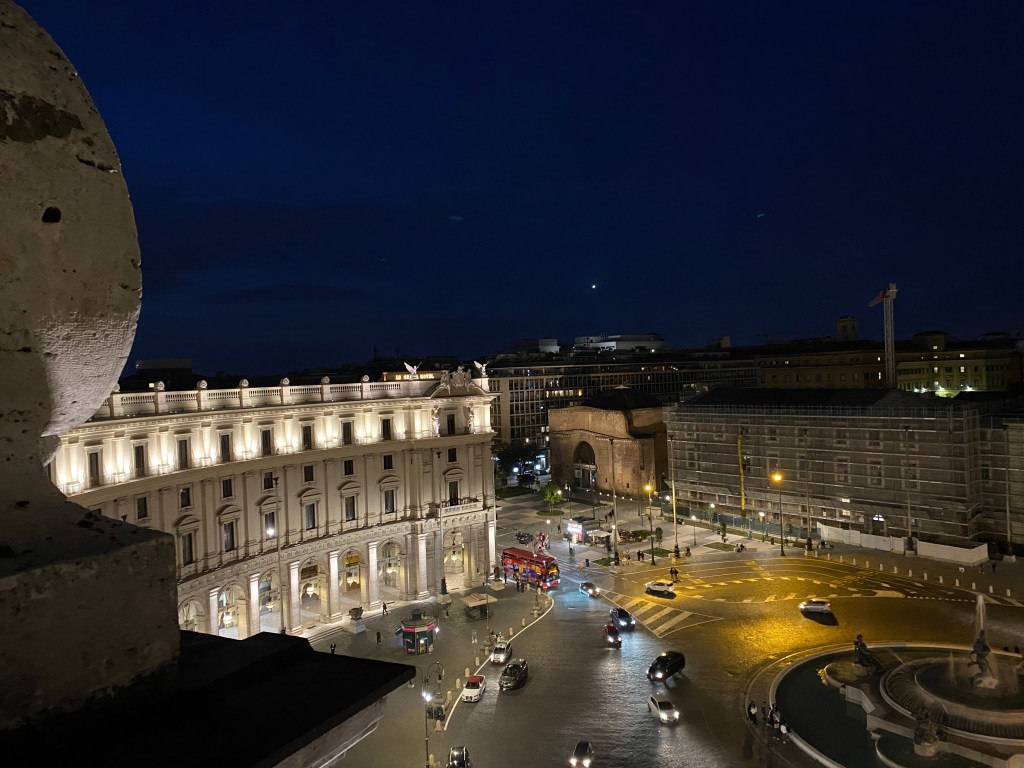
I watched The Boys premiere in Rome, which felt appropriate; there is no better place to witness the collapse of a Pantheon than from the city that has had the longest to mourn its own gods.
There is a persistent modern delusion that a team is a collection of virtues working in harmony. A more classical view is that a team is simply a cage where we keep all the monsters pointed in the same direction. When Billy Butcher moves from the premiere of The Boys to gathering his scattered teammates, he is not conducting an orchestra. He looks more like Cadmus sowing the dragon’s teeth.
There is something faintly ridiculous about the way he goes about building his little pantheon. The Olympians at least had the decency to live on a mountain and stay out of the plumbing. Butcher, by contrast, insists on pursuing apotheosis in alleys and dingy basements, often while conveniently wearing a Hawaiian shirt.
In Ovidian terms, such sowing never yields peace. It produces armed men who will eventually turn their blades on the world and then on themselves.
However, from behind of flickering muddy light of the screen which shares more with Caravaggio’s Roman slums than with the primary-colored aspirations of the modern superhero, The Boys is not a story of change, but of a brutal homecoming. If Ovid had been in the writers’ room, he would have found the CGI gore perfectly legible rather than excessive. He understood that one cannot speak of the divine without also speaking of the disgusting.
The Predator’s Apotheosis
In the Ovidian tradition, transformation is rarely an acquisition of new traits; it is a violent shedding of the unnecessary to reveal the inevitable. When Butcher crosses his point of no return, we are suddenly in the world of Lycaon. In the Metamorphoses, Lycaon is the king who serves human flesh to Jupiter to test the divine—a gambit of pure, nihilistic hubris. Butcher does the same, shaving off his own morality as a sacrifice to prove that the gods (the Supes) can be defeated.
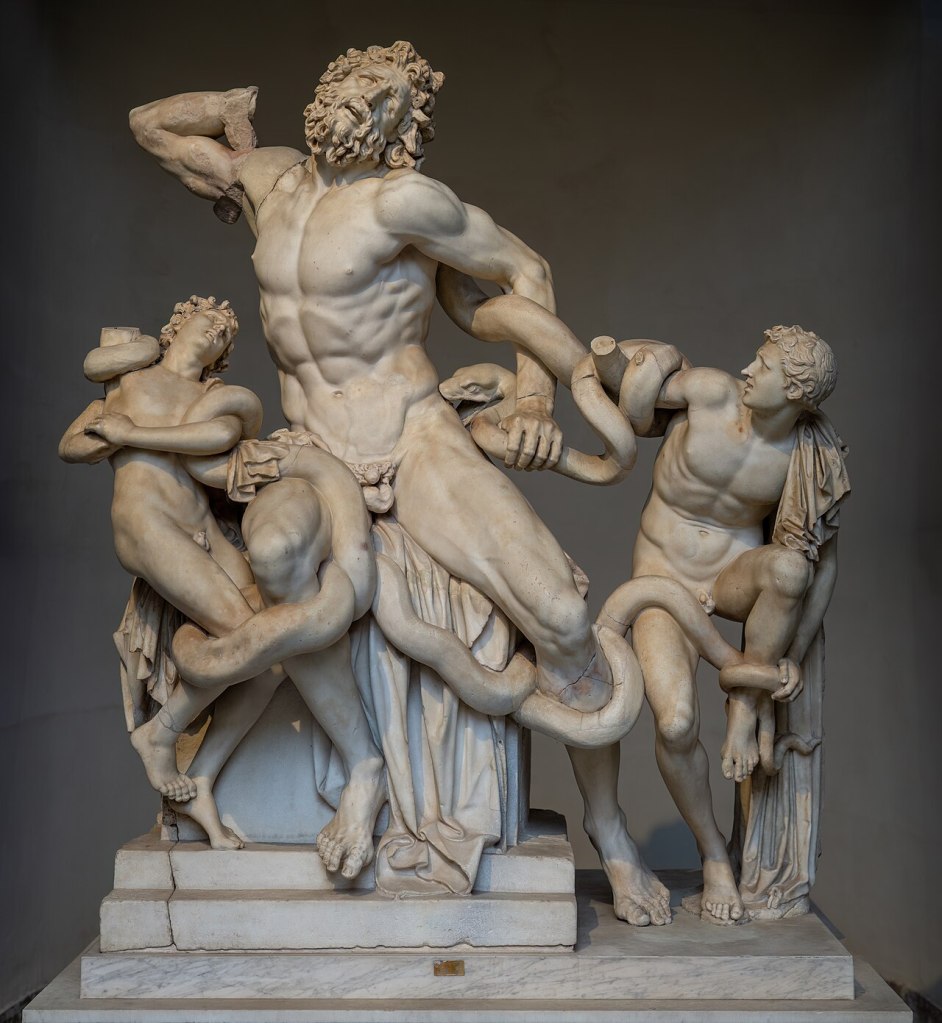
The tragedy of the wolf is that the fur was always there, just beneath the leather trench coat. The Compound V is not a corrupting agent; it is a biological permission slip. It provides the physical architecture for a nature that was already predatory, already contemptuous of the sheep he claims to protect. Butcher’s ‘False Gods’ logic dictates that to kill a monster, one must transcend the human.
However, in his mission, there is no distinction between the divine and the grotesque. He ascends not to a throne, but to a deeper cage, proving that power does not transform the nature of a man. It simply provides the fur for the wolf that was already there, waiting for the moon to rise.
The Chariot of Aspiration
If Butcher is the ancient, inevitable monster, Hughie Campbell is the modern, aspirational victim—the ‘Dork Fantasy’ made flesh. To understand Hughie, one must look past the pop-culture archetype of the ‘underdog bloke’ and toward the highbrow lineage of the displaced outsider: the socially misunderstood Peter Grimes or the desperate, green-light-chasing Gatsby. These men are defined by a ‘social grammar’ they cannot speak; they are forever pressing their faces against the glass of a legitimacy that rejects them.
Hughie’s temporary embrace of Compound V is his Phaethon moment. In the myth, Phaethon—the mortal son of the Sun—begs to drive his father’s chariot, not out of malice, but out of a crushing need to prove he belongs among the luminous. When Hughie takes the V, he is grabbing the reins of the sun.
He believes he is levelling the playing field, but Ovid warns us that a mortal frame cannot contain the divine fire without burning the world.
The ‘God Mode’ hardware doesn’t reveal a hidden saint; it reveals a boy scorched by his own inadequacy.
It hints at an uncomfortable truth: that goodness is often difficult to distinguish from a lack of opportunity… and even the most sensitive man will risk a global wildfire just to feel, for one afternoon, that he is no longer invisible.
The Chiaroscuro of Truth
The visual language of The Boys is not merely gritty, but an exercise in chiaroscuro. Like Caravaggio’s Roman canvases, the show’s muddy, desaturated palette functions as a rejection of the luminous, Renaissance perfection of the modern superhero myth. What follows is a rite of the grotesque, with the camera serving as witness to moral decay.
When Butcher assembles his team, we see a digital echo of The Calling of Saint Matthew; the light that hits his teammates does not pull them into grace, but illuminates them mid-corruption, caught in the squalid machinery of a divine war they never asked for.
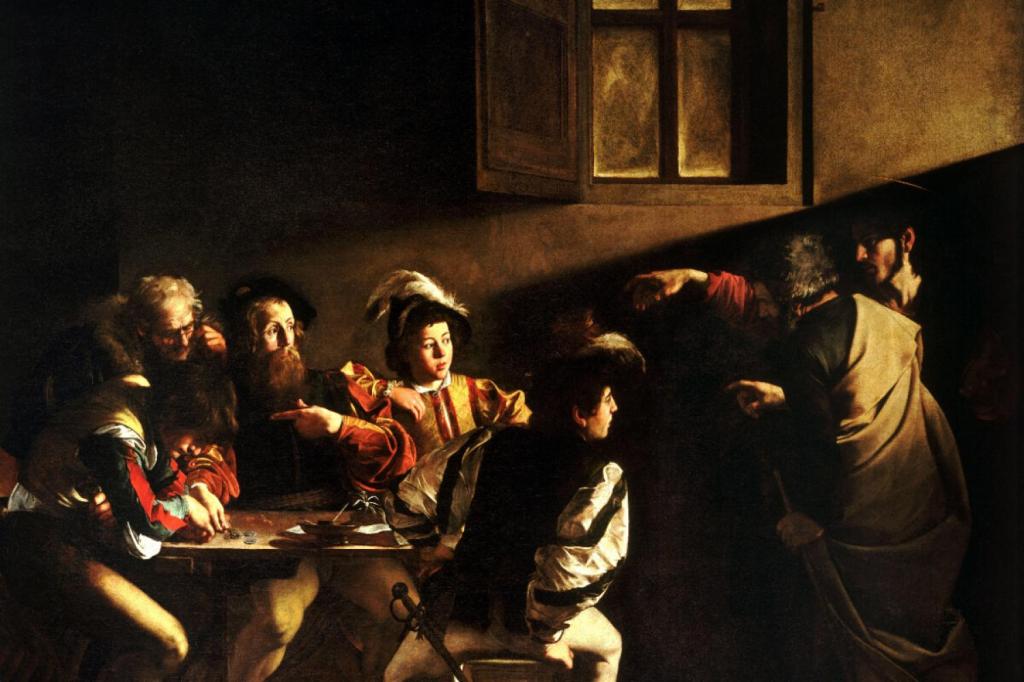
We, the audience, occupy the role of Saint Thomas, demanding to see the literal, visceral gore—the finger in the wound—to believe that these gods are physically real.
In Kimiko’s violence, we find the unflinching focus of Judith Beheading Holofernes: an act that is necessary, sickening, and profoundly un-heroic. This contamination of the myth with reality is a ‘Caravaggiesque’ honesty, not merely cynicsim. It suggests that you cannot truly see the light until you have acknowledged the physical dirt, the moral failure, and the rot beneath the flawless facade.
Conclusion
We end where Ovidian cycles often end: at the point where fate finally catches up with character. Butcher arrives at a Cadmean conclusion: the man who spent his life fighting the serpent finds his own limbs beginning to fuse into scales. His success is his ultimate failure, for in the vacuum of their absence, he is the only monster left standing in the garden.
Rome knew. Ovid knew. The crowd in the Colosseum, watching the spectacle with the calm patience of people who have seen this before, knew.
As we sit in our salons, one realizes that we do not watch The Boys to see the superheroes save the world, nor to see them fall. We watch to see the ancient Ovidian shadows cast by 21st-century fluorescent lights. We watch because even in an age of satellite surveillance, the human heart remains a primitive thing, forever caught in the midst of its own magnificent and terrible metamorphosis.
 Shima Trisna
Leave a comment