From Bellini’s La Sonnambula to the algorithm-driven stage of TikTok pop, the evolution of the modern ‘Hot Girl’ reveals a deeper cultural genealogy of female archetypes in music.
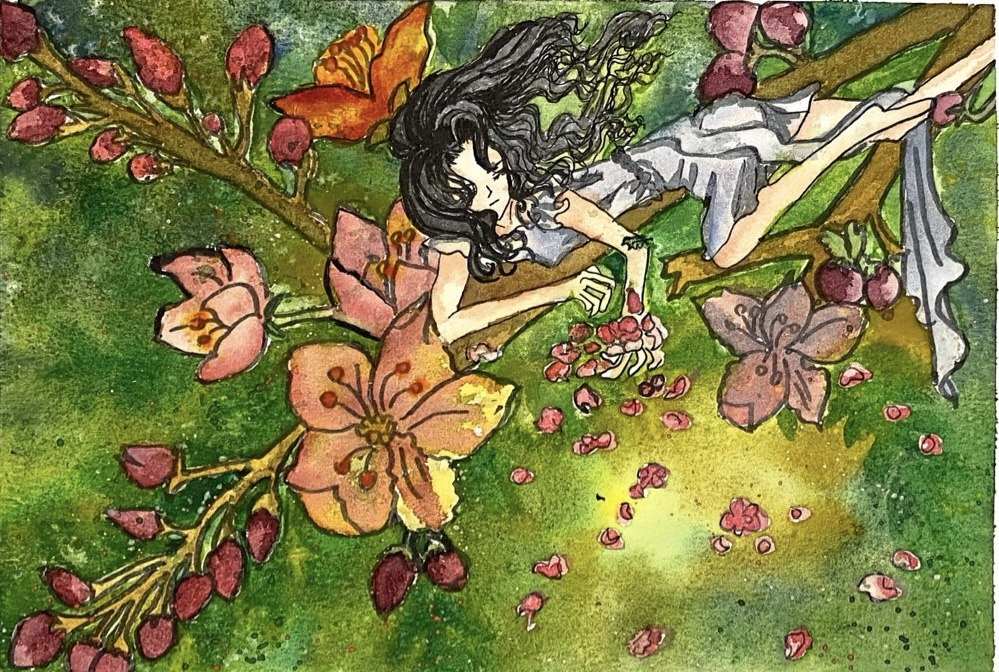
Cherry Blossom Fairy, illustration by author, 2026
Beyond the Sleepwalk
In the final act of Bellini’s La Sonnambula, Amina walks a high, precarious bridge in her sleep. She is the ultimate depiction of a 19th-century ghost: fragile, innocent, misunderstood, and suspended in a dream-like Somnambulism state. Fast forward to 2026, and the bridge has been replaced by a stage in a sold-out arena. The white nightgown has been swapped for high-gloss steel. She stops walking in her sleep to satisfy the face of the town and starts running at full speed. Amina has transformed into Tate McRae and Zara Larsson, leaving behind a Sad Girl persona to embrace her Hot Girl era. This is the moment when the Somnambulist wakes up, reclaiming her consciousness. If the Sad Girl is a poem, the Hot Girl is a manifesto disguised as a dance break.
Speaking of dance breaks, we must acknowledge the godmother of the genre: Salome.
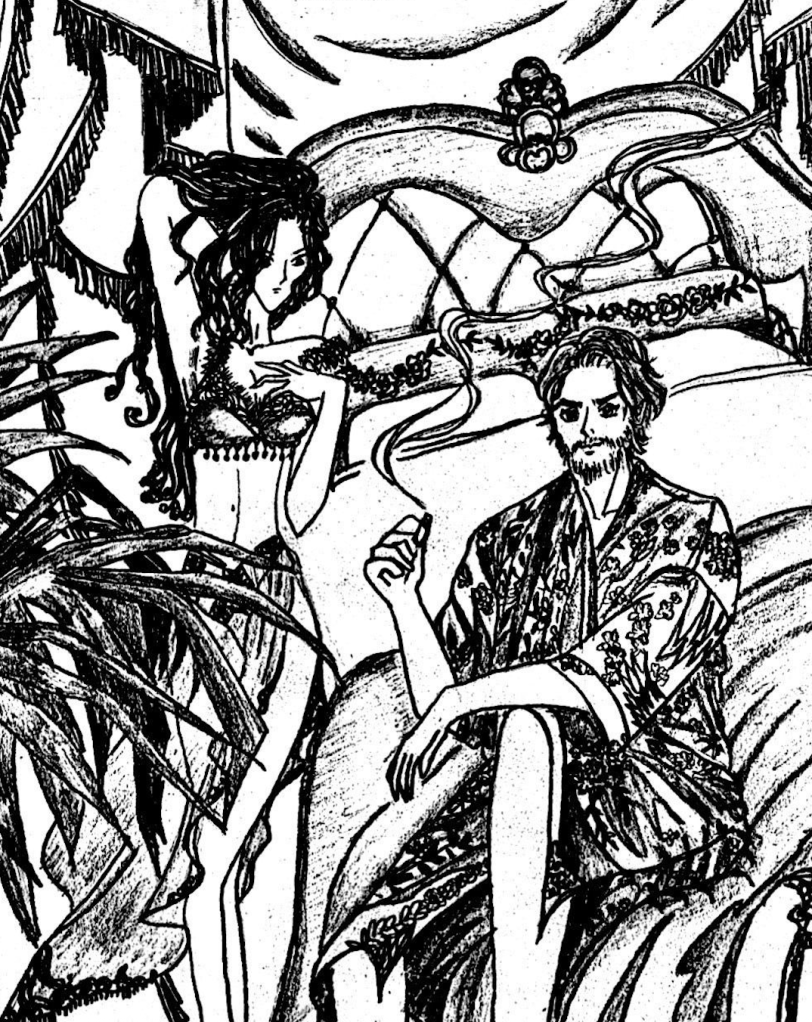
Salome’s ‘Dance of the Seven Veils’ was originally a high-stakes transaction for a singular, royal audience. Today, that performance has been industrialised. The ‘veils’ are now seven-second TikTok loops, and King Herod has been replaced by the Algorithm. The modern pop star performs for millions who demand a constant shedding of veils in order to stay relevant.
Salome has left the palace and entered the stream.
However, her master remains notoriously difficult to please and has a very short attention span.
If the 19th-century muse was defined by her ability to fade into the mist, the 21st-century icon is defined by her refusal to leave the light. To understand how we arrived at the high-gloss agency of the modern stage, we must first return to the bridge—to the moment the somnambulist stopped sleepwalking and began to see the village for exactly what it was.
The Genealogy of ‘Dirty Pop’ (The Road to the Hot Girl)
Historically, women were rewarded for being half-there, melancholic, and sleepwalking through their agency. Amina’s slow walking isn’t just a plot device; it’s the pace of a girl being forced to outgrow her former self under intense scrutiny. Anchoring it to the modern landscape of music industry, the early, Ingénue phase of a career where the artist is a vessel for others’ expectations. It is a performance of vulnerability that feels ghostly, as if the artist hasn’t quite “woken up” to their own agency. Once Amina transformed into Salome, she is a timeless archetype finally mastering the tools of her own trade. The athletic dance break functions as an exorcism of the former self.
Taping into the early 21st century, Dirty Pop was the moment the industrial pop machine stopped trying to be polite. It added grit, sweat, and a suggestive bass line to the Ingénue image. Before becoming Salome, Amina must pass through her Carmen era; the mechanical puberty of the pop genre.
The mid-90s’ Habanera was pioneered by the new jack swing lead by Janet Jackson, Toni Braxton, and TLC. They took the grit of swing and applied it to feminine desire. Melancholy has been replaced by autonomy, confidence, and unmistakeable coolness which became the DNA of the 21st century hot girls music. The shift from melody-heavy to rhythm-heavy style dominated the radio and charts back in those days. However, digitisation soon revolutionised how music is produced and distributed.
The confidence has shifted from reactive (proving I’m bad) to active (showing I’m better). It combines melancholy with athletic choreography maximised for algorithmic allure. The message is loud and clear: agency is the ultimate glow-up.
What follows shortly after was Carmen’s coolness then developed into hotness as a sonic texture. The raw and powerful vocals of the early dirty pop divas were softened and moulded into heavy breathing, industrial synths, and processed vocals for millions of audience. Britney Spears’ I’m A Slave 4 U and Christina Aguilera’s Dirrty has expanded the sonic definition of dirty pop. The dirtiness wasn’t just in the lyrics; but it was also in the distortion of the beat. It was the sonic tantrum of the Sad Boy repurposed for the dance floor. The production is thick with over-driven bass, hip-hop-influenced grit, and a vocal performance that uses growls and over-singing to prove its humanity. It’s a messy, sweat-drenched reclamation of the body designed to shatter the innocent Amina.
It was only natural that the electro-brat genre emerged in the late 2000s to 2010s, catapulting Kesha and Lady Gaga. The dirt has become digital, quirky, wacky, and over the top in this period. Habanera is deliberately auto toned—not to fix vocal pitches, but to make them sound robotic and inhuman. The music industry was entering its post-human pop, and idea that the Hot Girl is an indestructible, perfectly programmed machine that would make Mephistopheles gasp.
The pendulum swings once again to a minimalist and clean production in the 2020s onwards, bringing the new troupe of hot girls (Zara Larsson, Due Lipa, and Tate McRae). However, it’s Dirty Pop with a master’s degree. The vocals aren’t growling; they are rhythmic, staccato, and unmistakably cool.
If Dirrty was the sound of someone breaking out of a cage, Zara Larsson is the sound of someone who has already escaped and is now winning the race.

The confidence has shifted from reactive (proving I’m bad) to active (showing I’m better). It combines melancholy with athletic choreography maximised for algorithmic allure. The message is loud and clear: agency is the ultimate glow-up. Just as Linkin Park had to go through the ‘screaming youth’ phase to get to the ‘understanding adults’ phase, the Sad Girl had to go through the ‘dirty’ phase to get to the ‘hot/icon’ phase. Dirty Pop was the friction required to burn away the Ingénue mask.
The Icon
We have traveled a long road from the precarious bridges of 19th-century Switzerland to the vertical phone screens of the 21st. We have watched Amina wake up, Carmen redefined her rhythm, and Salome automated her veils for the digital king.
What we call Hot Girl music the completion of the arch. It is the precise moment the muse realises that the ghost was merely a costume designed by a village that preferred her haunted. By trading the spectral somnambulism of the past for the atomic agency of the present, artists have done the impossible: they have made the glow up a permanent state of being. The muse retires so that the architect can take over.
She is no longer the subject of the opera.
She is the architect of the theatre.
 Shima Trisna
Leave a comment