Romanticism, Nu-Metal, and the Sad Boy Archetype
Before we had the baggy clothes and distorted guitars of the 2000s to scream our frustrations, we had Lord Byron wandering the terrain of Aberdeenshire, providing the blueprint for the ‘solitary man’ haunted by his own shadow.
Long before the ‘Sad Girl’ aesthetic was curated on Tumblr, Giselle was literally dancing herself into a ghostly afterlife to cope with a breakup. They were the original architects of the aesthetic of the ache, long before the 80s goths wore black eyeliner and Tate McRae filmed herself writing music in her garage.
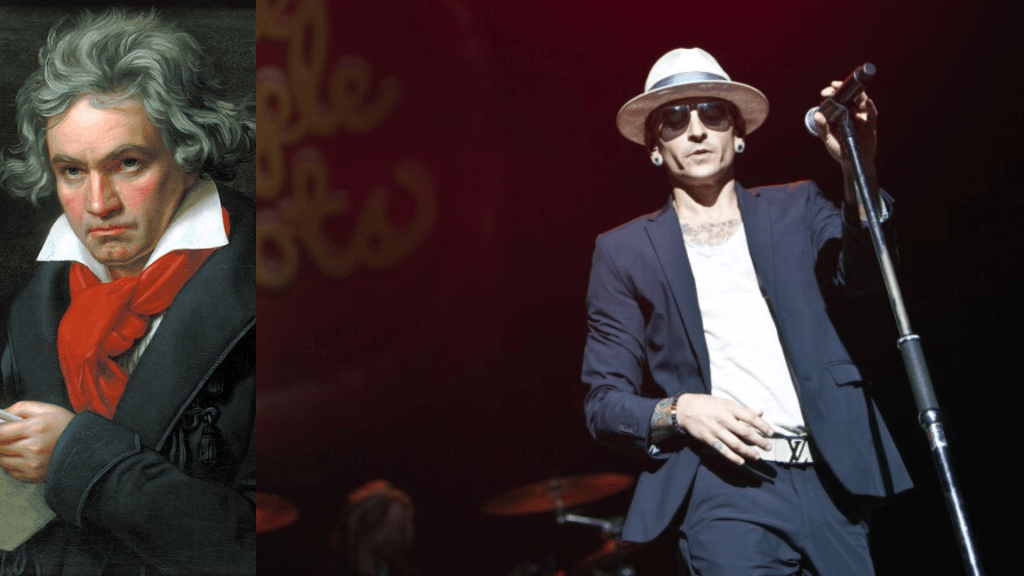
There is a specific texture to the 1980s post-punk scene that mirrors the isolation we hear in the grandiose notes of Beethoven’s compositions or despair in Schubert’s Winterreise. The Cure and Beethoven may live centuries apart, yet the trace of vulnerability and inner turmoil sits unmistakably at the centre of their music. Whether it is the tapping of rain against the window of a 19th-century castle or the blue glow of a phone in a modern bedroom, Sad-Boy-ism is not a passing trend but a recurring human archetype. From Baudelaire’s silk cravats to the lo-fi tropes of 2026, the world observed how the archetype of the “romantic, yet vulnerable man” has consistently reinvented its wardrobe to stay relevant.
Of course, melancholy has always been a high-effort performance. When we look at the portraits of a scowling, wild-haired Beethoven, we aren’t looking at a Classical composer; we are looking at the original frontman of the misunderstood. The Sad Boy is a figure of grand tragedy, but also one of immense, often hilarious, theatrics. Brooding is a choice; a curated aesthetic performance.
Across the century, the lifestyle of the Sad Boy carries a peculiar absurdity. Lord Byron lived on a diet of vinegar and potatoes to stay pale and interesting, while modern Sad Boys might starve their social media feeds of colour to look moody. Whether it’s a 19th-century poet complaining about his inheritance or a 21st-century nü-metal vocalist singing about being emotionally numb, the Sad Boy is almost always a person with enough free time to be professionally sad.
The Sublime Outburst
The ghost of Beethoven’s Ninth Symphony didn’t disappear; it simply migrated into the Marshall stacks of the American Midwest. The feeling of being overwhelmed by something much larger than yourself remains in the DNA of today’s musical landscape. Both Beethoven and Chester Bennington (Linkin Park) or Chino Moreno (Deftones) use sound to simulate a mental breakdown and subsequent breakthrough. The minor chords that drive In the End are not so far removed from the intimate melancholy of Für Elise. However, the bridge between Beethoven and nü-metal doesn’t stop there. There is a direct lineage between the snapped piano wire of 1800s Vienna and the seven-string guitar chugs of the suburban garage
The genre of nü-metal is built entirely on the “Verse-Chorus” explosion. The verse is the “brooding” where the Sad Boy whispering to himself, and the chorus is the “eruption” where the Sad Boy screaming at the world. The distorted power chords of the 2000s are simply the modern iteration of Beethoven’s hammers; both seek to shatter the listener’s complacency. The Sad Boy isn’t always quiet; sometimes he is loud, jagged, and aggressive. The extreme volume is used as a ritual for catharsis.
Isolation vs. The Collective
While the Sad Boy was busy punching walls in the suburbs of the 2000s, his counterpart—the Sad Girl— was reinventing the ‘femme fatale’ as someone who wasn’t dangerous to others, but deeply, poetically dangerous to herself. While Peter Grimes represents the “Sad Boy” as the social pariah, Giselle (1841) represents the “Sad Girl” as the ultimate victim of a broken heart, dissolving so completely into sorrow that she transcends the physical world altogether..
Benjamin Britten’s orchestral swells in Peter Grimes’ Sea Interludes function almost exactly like a distorted guitar pedal in a Deftones or Linkin Park song. All these artists use massive, overwhelming sound to represent an internal emotional storm. By contrast, Adolphe Adam’s ethereal, floaty, and repetitive score in Giselle represents the misty, nocturnal forest of the Wilis.
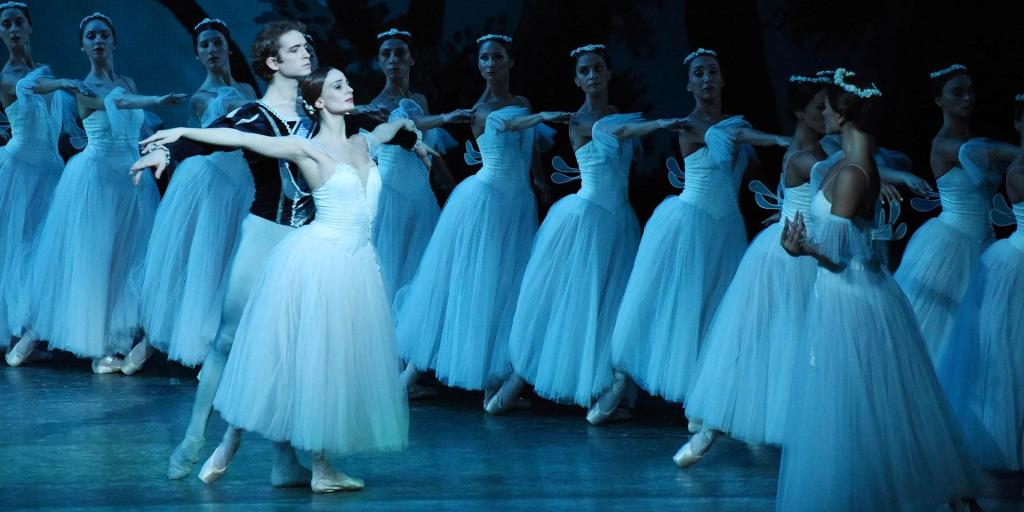
Giselle, Teatro Regio Torino
Both composers use nature as a visual manifestation of melancholy: the sea roars and crashes around the Sad Boy, while the Sad Girl drifts into moonlit fog. It also serves as a spectral mirror: Sad Girl fades, while the Sad Boy fights.
Modern pop continues to rehearse this lineage. Artists such as Lana del Rey, Billie Eilish, Olivia Rodrigo, and the early work of Tate McRae are the modern descendants of this archetype. They use melancholy as atmosphere, a spectral presence that lingers in the room long after the music fades.
The Architect of Spleen (Baudelaire & SoundCloud)
How has the “Sad Boy” moved from an outcast rejected by society to an outcast who rejects society by retreating into a digital cocoon?
Well, Baudelaire was the original bedroom producer. Baudelaire loved “low” things. Whether it was the gutter, the tavern, or the macabre, he found comfort in “low-fidelity”.
Fast forward to the 21st century, the crackle of a record and the muffled thrum of a beat are curated into something beautiful. Thanks to SoundCloud, the youthful hiphop scene thrives on “Low-Fidelity”. Hiphop artists take pride in the distorted sounds, glitches and its unpolished, raw edges of lo-fi beat. It rejects the “High Art” polish of the mainstream, just as Baudelaire rejected the “Proper” literature of his time.
Had he lived in the current time, Baudelaire would have loved the muffled, repetitive thrum of a Lo-fi beat. He understood that sometimes, the only way to survive a city that doesn’t see you is to turn your boredom into a brand. His ‘Spleen’ was the 19th-century version of a 2:00 AM ‘Sad Boy’ playlist. It’s a ritual of wallowing that somehow makes the isolation feel curated, rather than just lonely.
The Contrast
Is sadness a gendered performance, or is there a universal spectral energy that both archetypes share? Why do ones feel the need to wear their internal state?
I’ve noticed that Sad Boy and Sad Girl music are not just gendered versions of the same thing. They are built on different emotional permissions, different narrative arcs, and different social consequences.
In the Sad Boy tradition, emotion is a closed loop of absolute interiority—a private, obsessive architecture where suffering isn’t a problem to be solved, but a territory to be inhabited. Here, the wound is never quite allowed to heal because it has become the foundation of his identity; to be “cured” would be to vanish. Like Baudelaire’s Spleen, this sadness is an essence—a permanent, brooding atmospheric pressure that the artist contemplates with the stillness of a martyr. In a cultural landscape that demanded stoicism, the “brooding” space of Morrissey or the deep contemplation of Chester Bennington became the only room where men were permitted to be fragile. It is a tradition built on the permission to crumble, turning the wounded man into a figure of quiet, radical introspection.
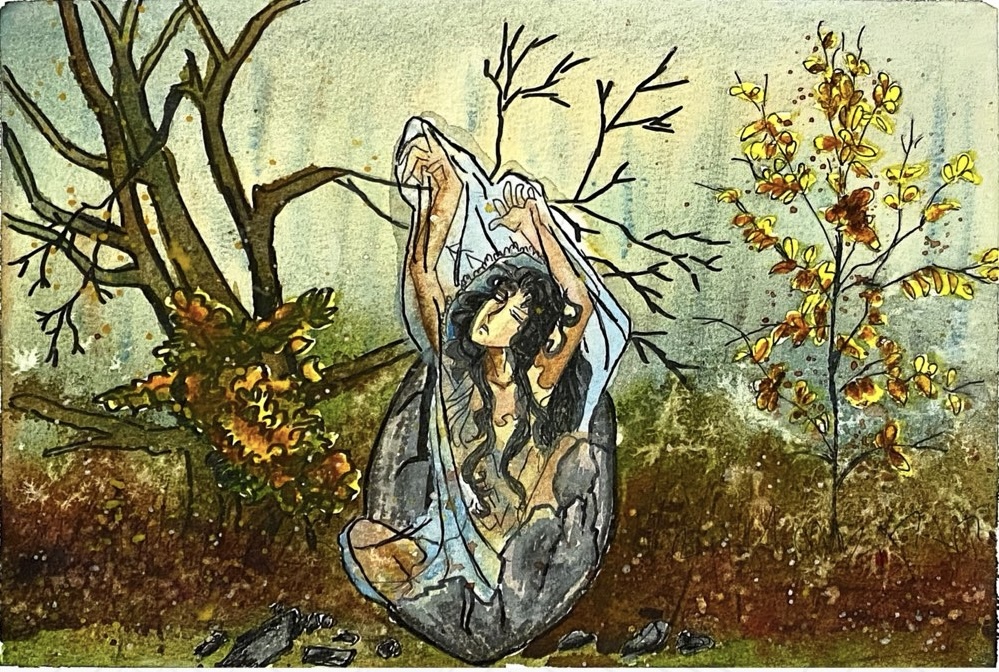
The Awakening, illustration by author, 2026
Conversely, the Sad Girl tradition treats emotion as a relational and contextual event, often born from the friction of love, betrayal, or systemic injustice. While the Sad Boy gazes into the void, the Sad Girl narrates her way through it, processing the wound as a chapter rather than the entire book.
In this lineage—from Giselle’s heartbreak to the modern confessional—sadness is a transformative phase, a spectral haunting that eventually yields to the dawn, suggesting that while the pain is profound, it is not the person.
The Sad-girl lineage emerges not from a sense of permission, but as an act of defiance against constraint. From the raw, intellectual confessions of Joni Mitchell and the cinematic, nostalgic exploration of Lana Del Rey, this music is a reclamation. Historically, women were allowed their sadness as a decorative trope, yet were punished for anger or autonomy; thus, the music of Nina Simone or the jazz divas became a way to breathe life into those forbidden complexities.
The narrative structure of the Sad Boy tradition is famously circular. These songs tend to loop emotionally, fixating on a loss that resists any form of closure. There is a deliberate aestheticisation of suffering here, where lyrics feel like an obsessive, unresolved longing that never seeks an exit. It is this very lack of resolution that allows Sad-boy music to age into myth. It doesn’t solve the pain, it simply immortalises it in amber.
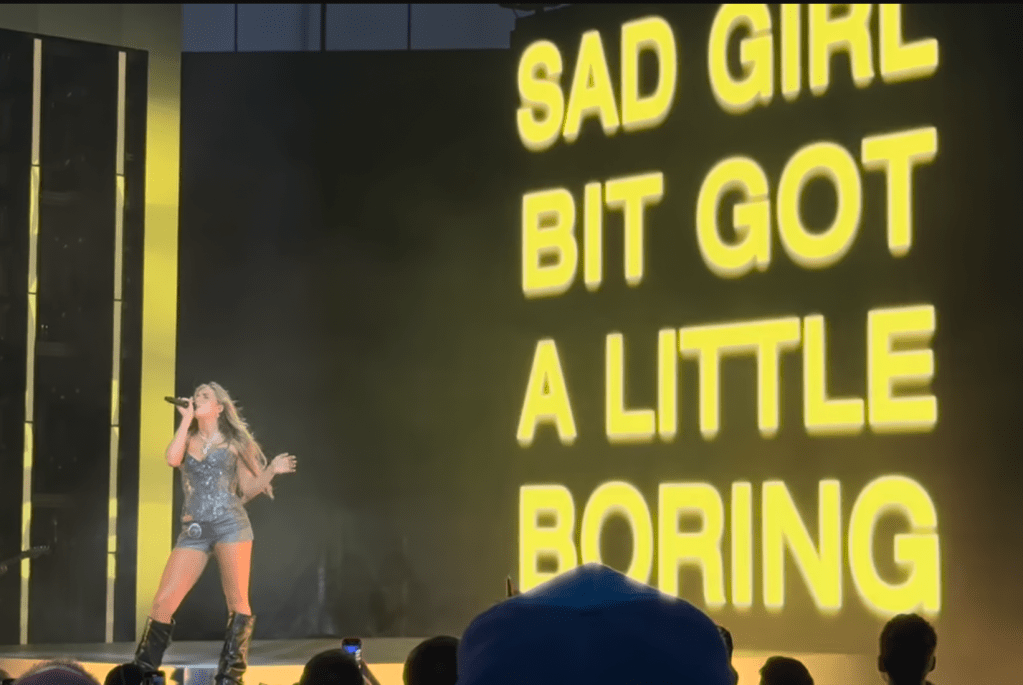
In contrast, Sad Girl music usually possesses a distinct narrative direction. These songs tell a story. They name the harm, assign responsibility, and move the listener toward a hard-won clarity.
Even at its most tragic, the music of the great singer-songwriters feels like a process of naming—a map through the dark rather than a commitment to stay there. This is why the Sad Girl tradition often feels therapeutic rather than mythic; it offers the listener a way out of the forest, while the Sad-boy is still busy describing the trees.
In our cultural reception of the Sad Boy, we have a tendency to mistake a long shadow for a deep soul. We afford the brooding man a generous, almost infinite, runway; here, his pain is synonymous with his genius, and his refusal to heal is seen as his greatest proof of authenticity. This is why the Sad Boy is permitted to inhabit the same emotional wound for decades—from the static-filled rants of the 2000s to the romanticised ruin of the 19th-century “Dandy”—and is often most celebrated only after he has been entirely consumed by his own destruction. We don’t ask him to move on. We ask him to stay in the dark so we can admire the silhouette.
We don’t listen to Peter Grimes or Linkin Park to feel better; we listen to feel seen.
The Sad Girl, however, is met with a much shorter leash. While her initial vulnerability is permitted—even encouraged as a “delicate” trope—she is quickly policed for its duration. If her pain is not swiftly transformed into a lesson or resolved into a higher state of stability, it is dismissed as instability. Paradoxically, this cultural impatience is exactly what forces her to be more agile. The Sad Girl lineage often evolves at a frantic pace because she is not allowed the luxury of the loop, pushing her to innovate her way out of the very sadness the world once demanded of her.
The Eternal Return
We don’t listen to Peter Grimes or Linkin Park to feel better; we listen to feel seen. By keeping the lineage alive, we ensure that no matter how bright and optimised the modern world becomes, there is always a dimly lit room waiting for us.
Beethoven found the sublime in the roar of God. Baudelaire found it in the rot of Paris. The modern Sad Boy finds it in the glitch of a distorted vocal.
Perhaps the Sad Boy endures because he refuses the demand for constant brightness. In an age of curated happiness, the spectacle of melancholy becomes its own quiet form of resistance.
While the rest of the world performs a flawless ‘living,’ he performs the ‘leaking.’
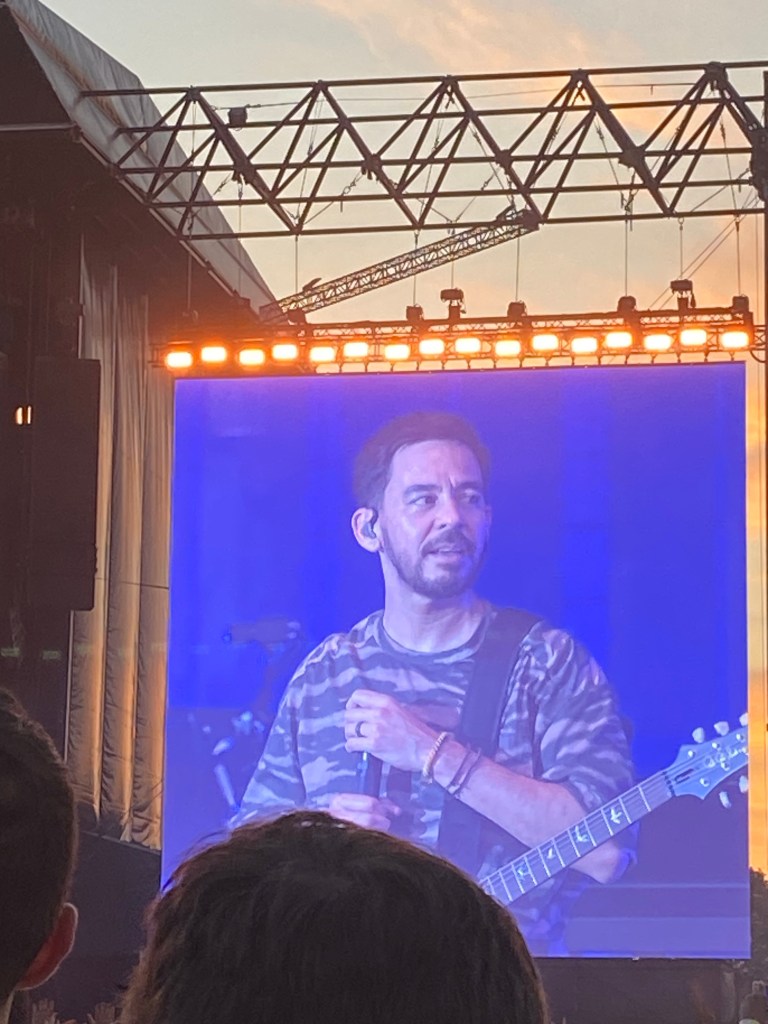
From the salt-sprayed cliffs of the 19th-century stage to the blue-light glow of the 21st-century bedroom, he remains our most faithful witness to the fact that to be human is, occasionally, to be beautifully, theatrically, and entirely inconsolable.
 Shima Trisna
Leave a comment