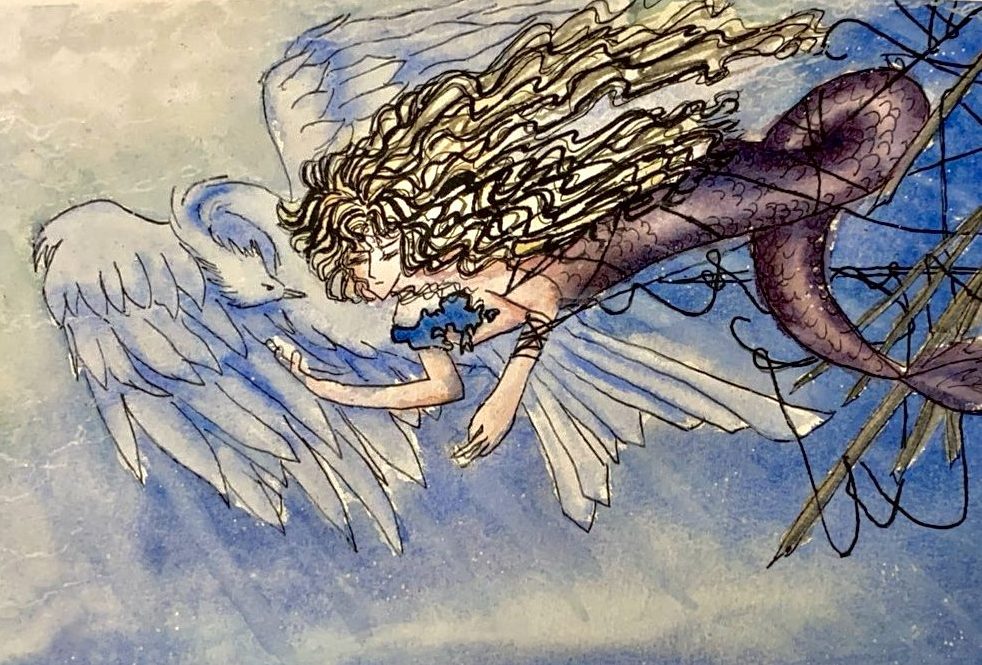
De Animalibus, illustration by author, 2026
There are periods in history which later generations are fast to call dark or stagnated, not because nothing of significant occurred within them, but because what occurred resisted immediate visibility. ‘A foggy period’ one may call; something which is often mistaken for emptiness. Yet in nature, fog gathers only where temperature, pressure, and time converge. In short, it is not absence, but accumulation.
The medieval world which is frequently reduced to isolation and stagnation can be read differently: a long interval of contemplation, prayer, and interior labor. It is a time when thought withdrew from spectacle and turned inward to oneself. Therefore, in this sense, isolation did not always mean loneliness. It meant incubation. One may say that ideas were not yet innovations at this stage, but they were still forming their internal grammar.
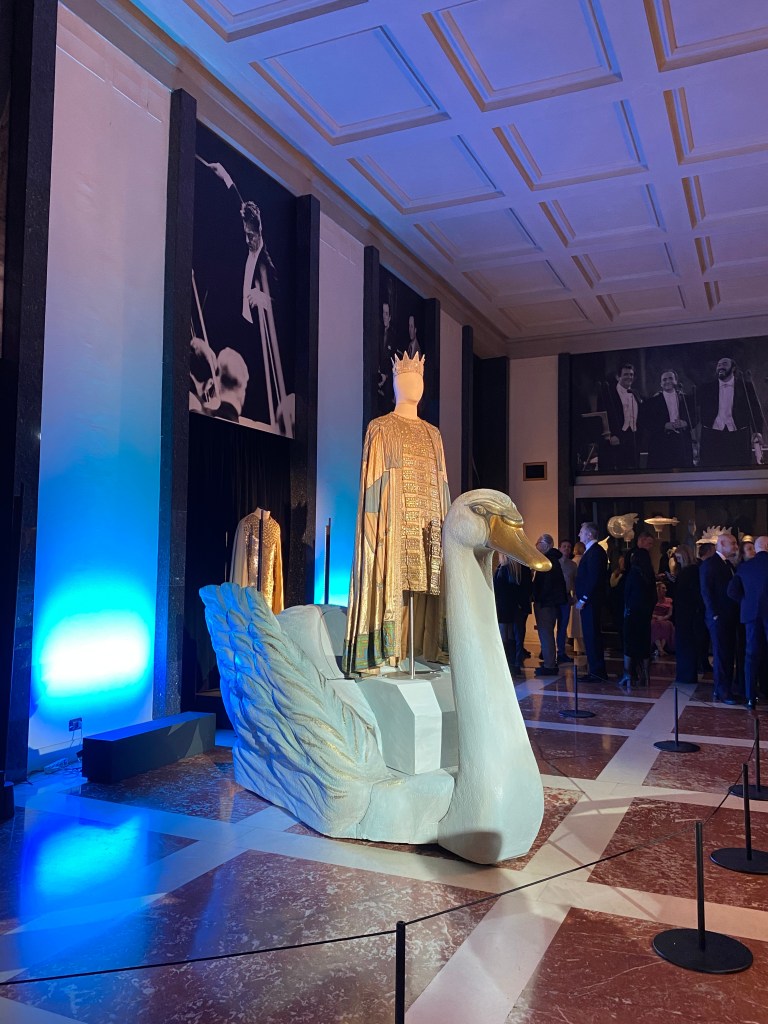
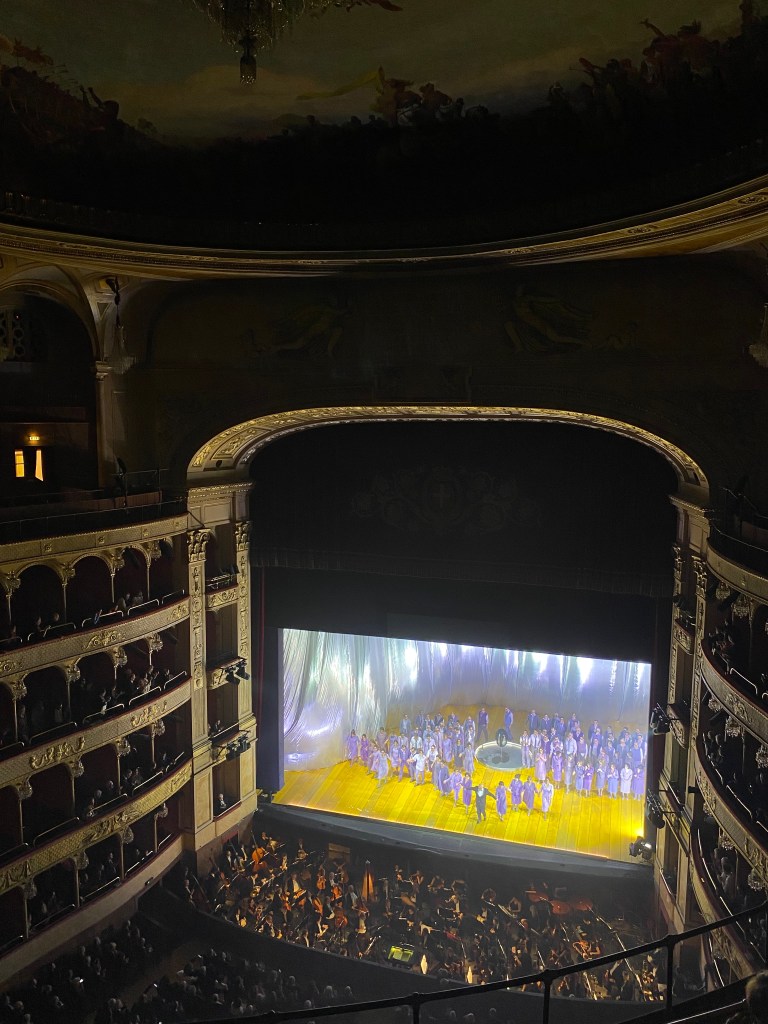
Richard Wagner’s Lohengrin unfolds within such an interval. The opera gives equal weight to both arrival and disappearance. Lohengrin enters Brabant as a necessary figure, summoned at a moment when order cannot yet reorganise itself. He arrives neither as conqueror nor ruler, but as a provisional coherence. A bridge, one may say. A pause made probable and visible.
Lohengrin is often read as a symbol of hope, guidance, or divine intervention. Yet his most instructive quality lies not in his presence, but in its temporality. He does not stay. He cannot stay. His condition for belonging is silence: no questions asked, no origins demanded. However, once curiosity overtakes faith and explanation is required before structure is ready, he must go.
In this sense, Lohengrin resembles inspiration itself. It does not arrive on command, but inspiration requires faith, patience, and a willingness to wait. In the opera, these qualities embodied, imperfectly, by Elsa of Brabant. Accused, misunderstood, and isolated, Elsa inhabits a fragile interior space. While her withdrawal grants her vision, it also makes her vulnerable. In her isolation, her perception sharpens, while on the other hand her defence is jeopardised. She prays and prays, and eventually something arrives.
Creation (be it poetry, painting, or research paper), Wagner suggests, is never immediate. It requires effort and endurance, but also a catalyst. Not only that, if their ideas are too novel, the unready society may reduce the artists, inventors, thinkers as suspects. Galileo Galileo and Nicolas Copernicus, had they were still among us, could attest to that. Their work preceded its justification. Accusation often arrives before comprehension. .
History is crowded with figures who laboured in partial darkness before their coherence became legible.
However, ones may tend to forget is that periods of withdrawal have long preceded transformation. Leonardo da Vinci and Michelangelo both endured prolonged intervals of solitude and unfinished labor before producing what later generations would call masterpieces. What appears, from a distance, as genius often began as silence.
Yet Lohengrin is not a celebration of isolation without limit. Elsa’s inwardness, unbalanced by collaboration or anchoring, leaves her susceptible to manipulation. The tragedy is not curiosity itself, but its timing. Explanation demanded too early dissolves what has not yet stabilised. The cost is irreversible: Lohengrin leaves, and with him, the protective coherence he provided.
Only after his departure does Gottfried reemerge and assume his role as Duke of Brabant. Unlike Lohengrin’s brief reign which was deemed as a miracle, leadership returns to the region as continuity. The system no longer requires a provisional figure. A new tradition is born through both preservation and succession. Lohengrin may have disappeared, but is not a failure. It is simply a function fulfilled.
Economists would later recognise this rhythm. Joseph Schumpeter gave it a name: creative destruction. New structures emerge by the displacement of what has become insufficient. The old must give way because it has completed its task, not because it was wrong.
Yet what Wagner intuited through myth feels increasingly endangered in the modern world. The interval between arrival and replacement has collapsed. Innovation cycles accelerate; disappearance is no longer dignified, but a surprising phenomenon. Isolation, which was once a space for contemplation and reinvention, is compressed, interrupted, or rendered suspect. We demand productivity without pause, reinvention without rest. Over and over again. Day by day.
We no longer linger in the medieval fog long enough to let coherence emerge. We rush from disruption to disruption, mistaking motion for progress, novelty for renewal.
Transformation remains seductive. But not all destruction is creative, and not all continuity is stagnation. Aristotle in De Animalibus puts a question mark at the border of categories, sort of a meditation on where one form ends and another begins. Time is needed to reclassify newly transformed forms. Some structures may evolve, but some others require defence… not because they are perfect, but because they shelter memory, rhythm, and meaning. Others must be released, not violently, but with grace.
Lohengrin reminds us that creation is a passage, not a possession. That some figures are meant to arrive, illuminate, and leave. And that the most painful losses in history are not always those imposed upon us, but those we accelerate, forgetting that even renewal once required time.
Maybe the question we now face is not whether to preserve or replace, but whether we still know how to pause. Whether we can recognize the value of withdrawal before invention, and disappearance before rebirth. And whether, in an age that demands constant arrival, we still allow ourselves the dignity of letting certain things go… slowly, reverently, and too early to be mourned properly.
 Shima Trisna
Leave a comment